Why is biomechanics important in children’s footwear?
Biomechanics in children’s footwear is important because it protects foot development. It has been proven that shoes influence stability, walking speed, and environmental perception. Poor design can hinder a child’s progress.
What is essential in proper children’s footwear?
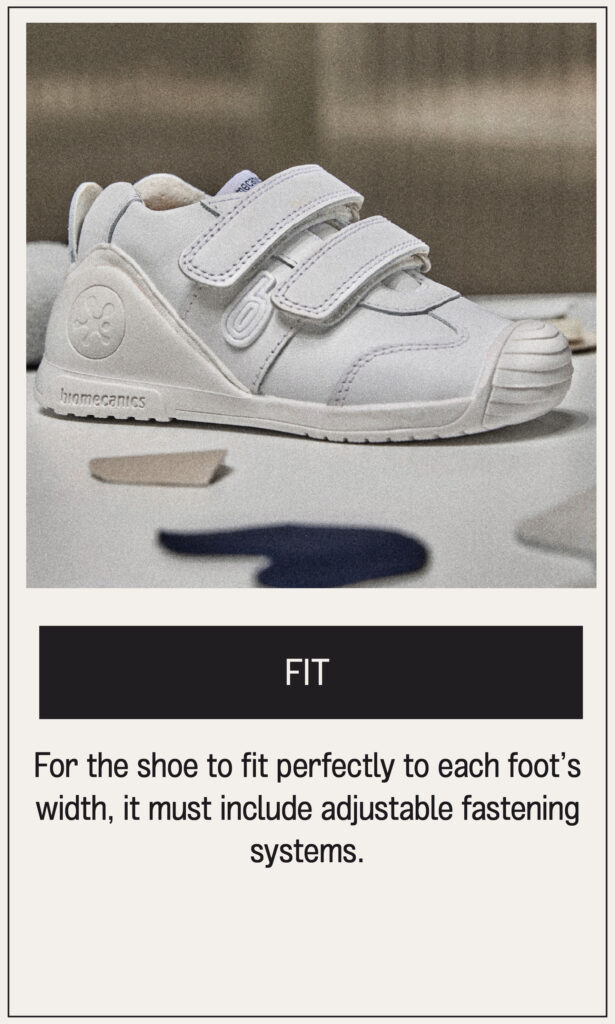
It should have a last suited to the child’s stage of development to avoid pressure on the toes and instep, be stable at the heel to prevent slipping, flexible, breathable, and feature a good fastening system.
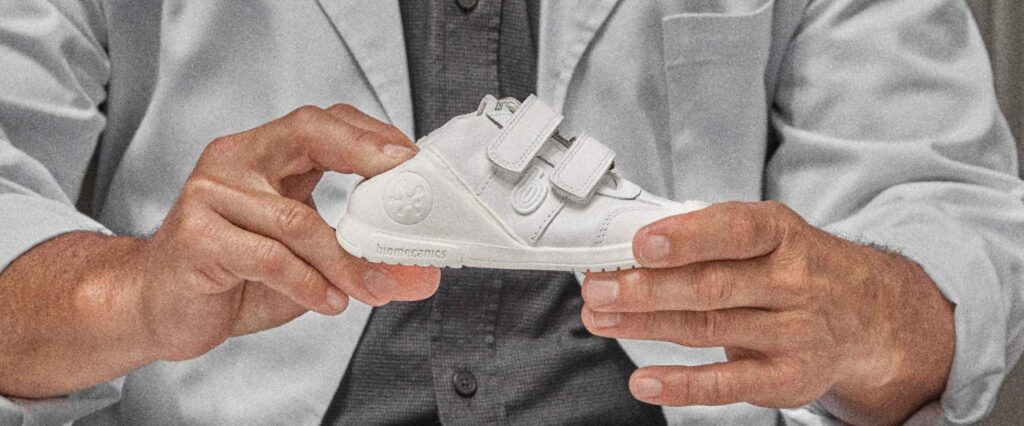
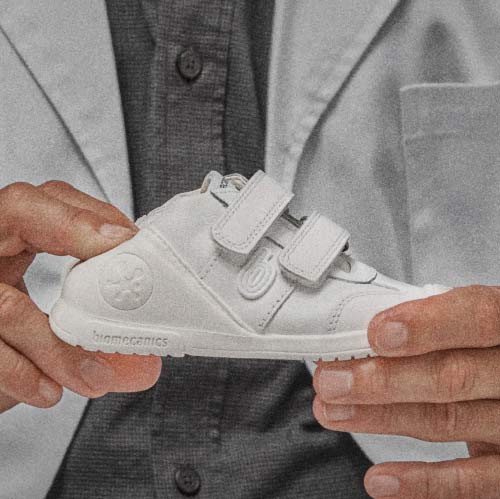
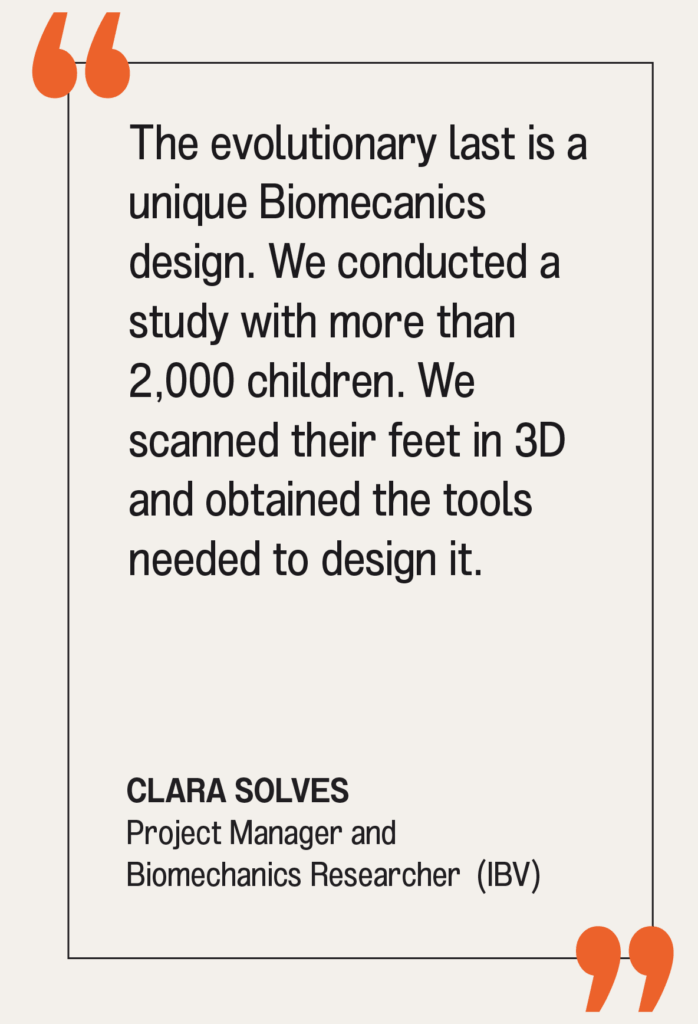
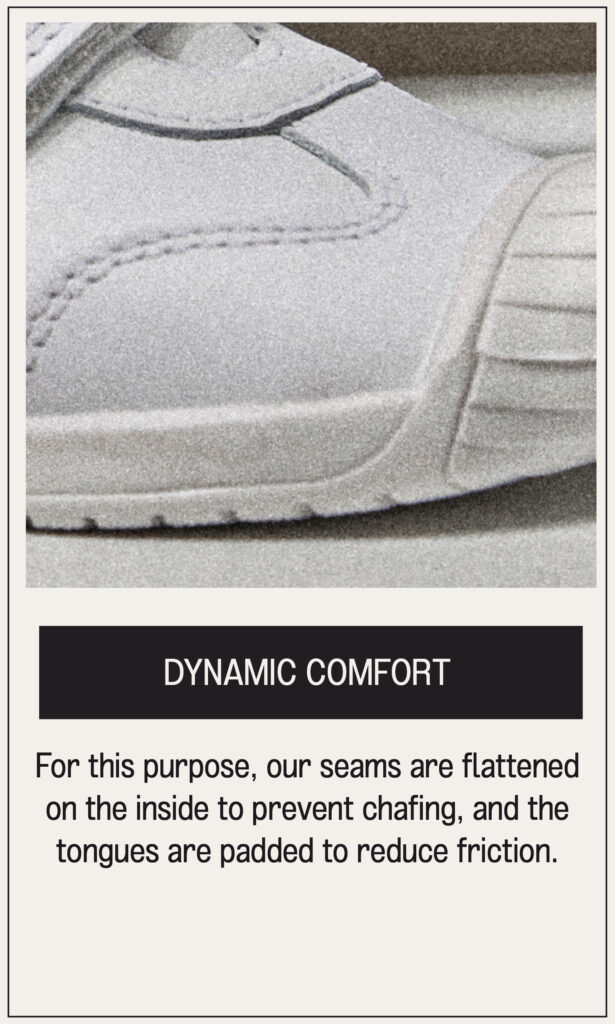
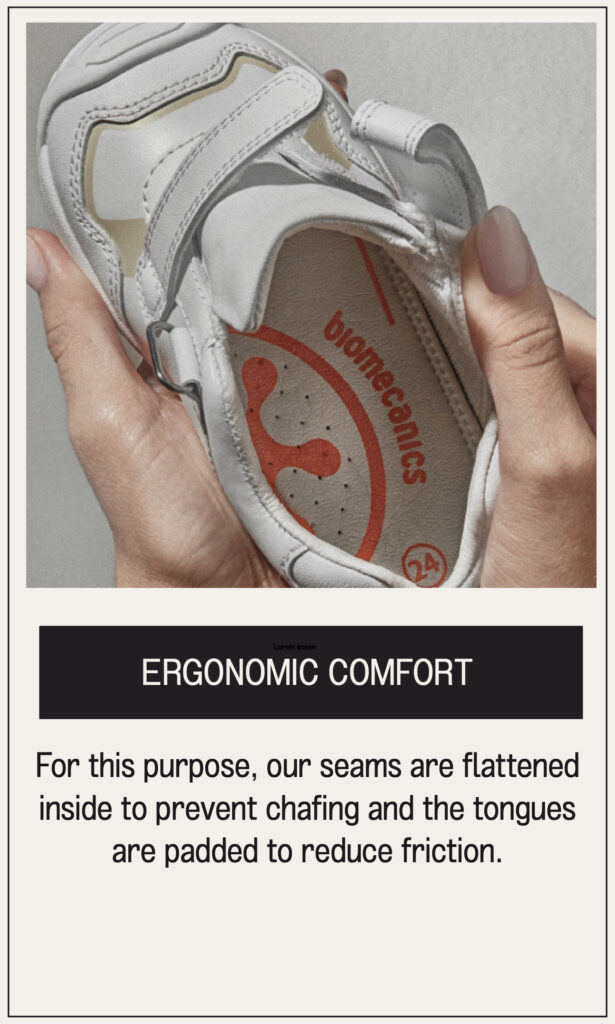
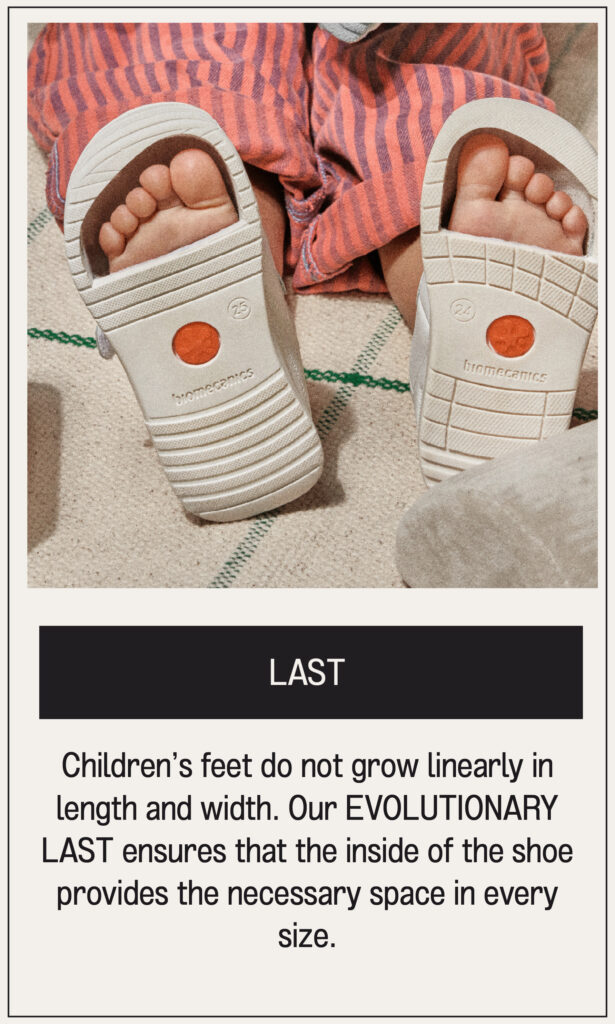
At Biomecanics, we study the feet of thousands of children at different stages and design our evolutive last taking into account that the foot grows not only in length but also in width. For greater comfort, all our seams are flattened and tongues are padded to avoid pressure.
How do you choose the right shoe size for children?
To choose the correct size, measure the child’s foot on the ground from heel to toe and make sure there is between 0.5 and 1 cm of free space inside the shoe. This allowance prevents chafing and allows for natural foot growth. More information can be found in the size guide.
Keep in mind that the allowance should not be much greater to avoid internal foot movement.
How often should a child’s shoe size be changed?
According to pediatricians and children’s footwear experts, children increase shoe size quickly but not at a constant rate. The approximate size change by age is:
· Under 15 months: one size every 4 months.
· 15–24 months: one size every 6 months.
· 24–36 months: one size every 8 months.
Check regularly whether the toes touch the front or if the shoe feels tight. A good tip is to remove the insole to see where the toes leave a mark.
Is it a good idea to buy shoes one size bigger so they last longer?
No. Shoes that are too big can cause instability, falls, and improper gait. The recommended space should always be respected, but not exceeded.
Is it advisable for children to inherit used shoes?
It’s not ideal. Footwear adapts to the previous child’s gait and may affect posture or cause discomfort for the next wearer.
How can you tell if a shoe is too small for a child?
Common signs:
· Pressed or deformed toes.
· Redness or chafing.
· The child asks to “take the shoe off.”
· Unusual walking or dragging feet.
A good trick is to remove the insole and check where the toes leave a mark.
Why is it important for children’s shoes to be breathable?
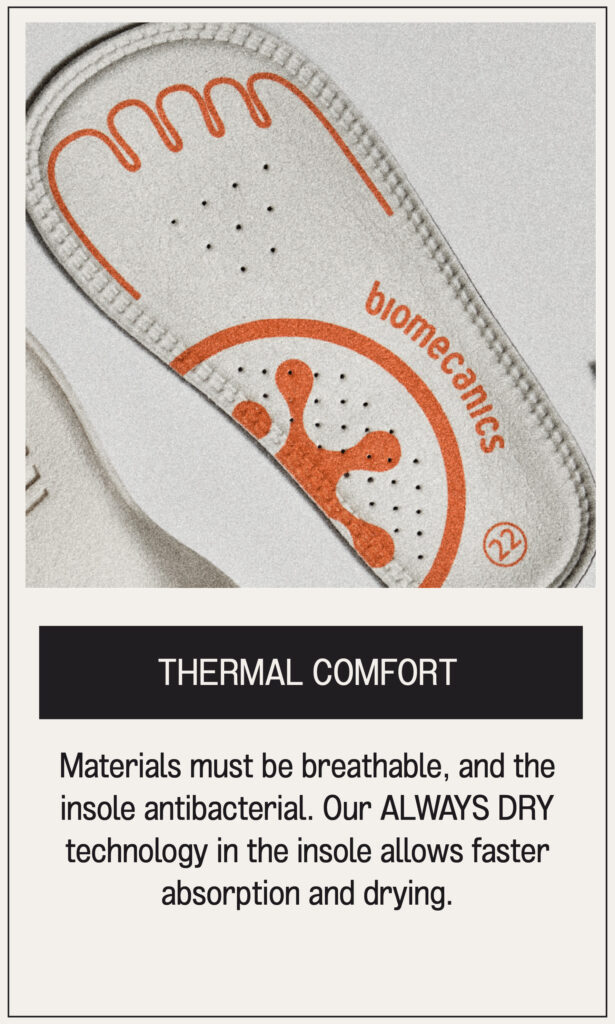
Children’s feet sweat more than adults’. Breathable materials help prevent bad odors, moisture, fungi, and chafing. Removing the insole after use to air the shoe is highly recommended.
What shoes are recommended for first steps?
For babies and first steps, it is recommended to have protection for outdoor use, high-quality materials, and a design that allows natural motor development without interfering with balance or proprioception.
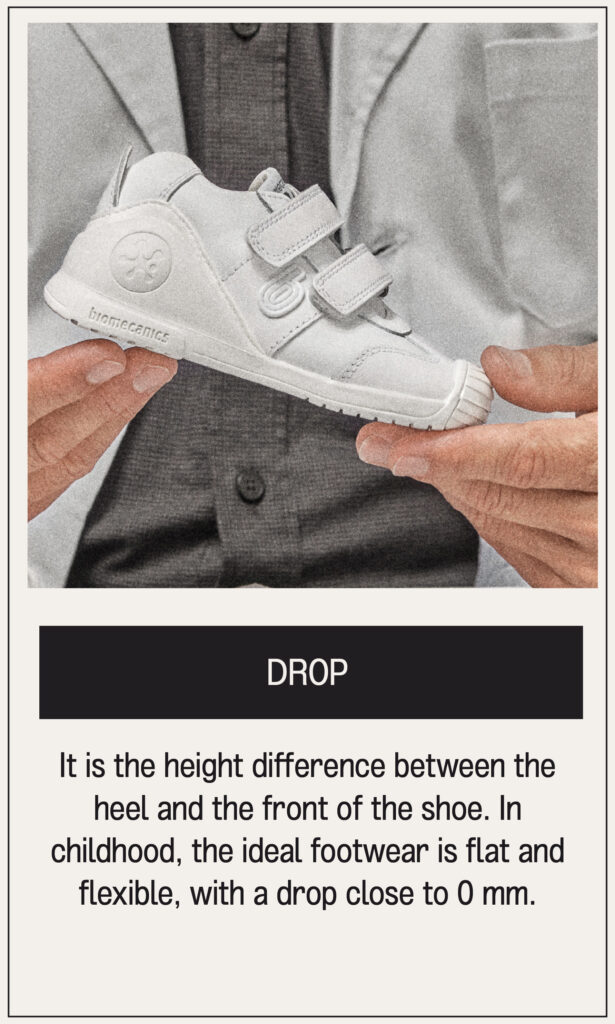
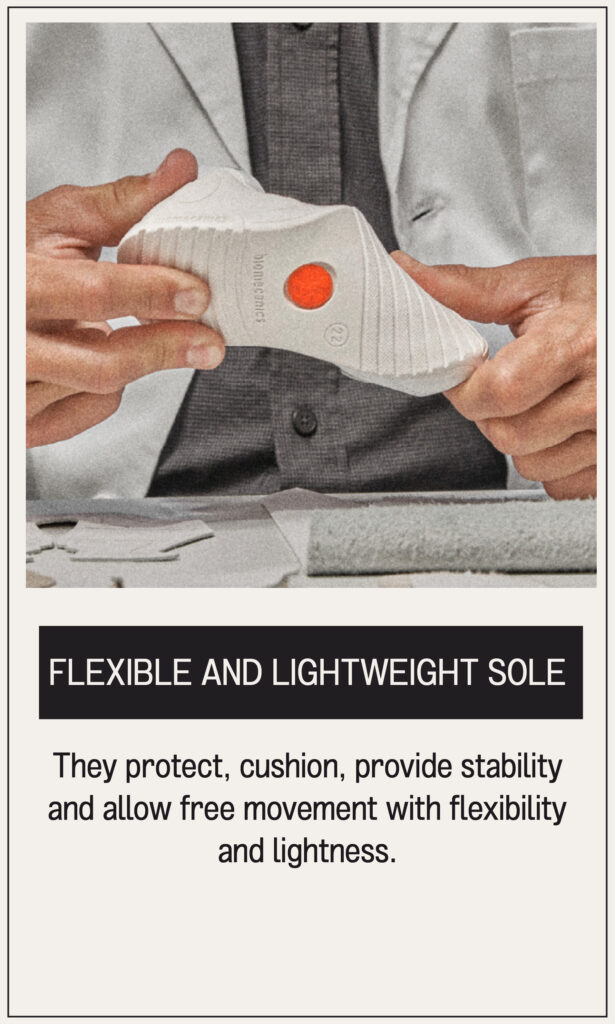
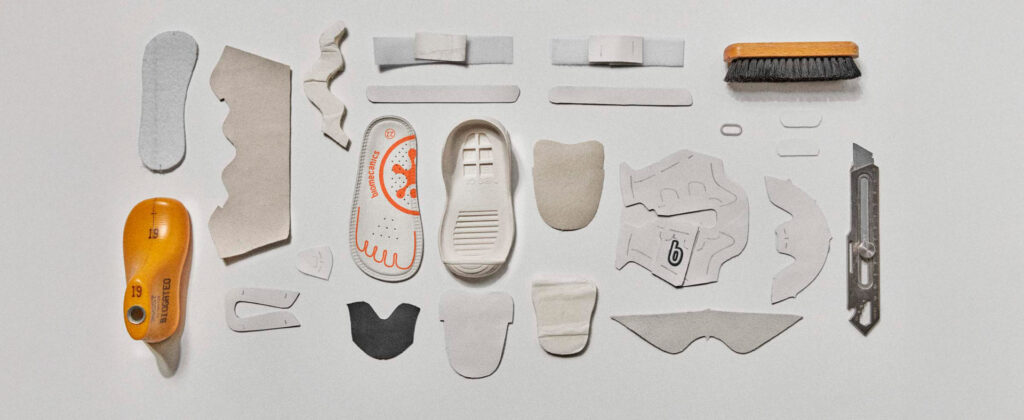
We recommend our Biogateo line, with biomechanical design for this stage combining crawling and first steps: wide toe box, flexible sole, zero drop, lightweight, natural materials, a “U”-shaped notch to avoid pressure on the Achilles tendon, and flattened seams.
What should you do if a shoe causes chafing?
Check the size, shape, and materials. If the shoes are new, let the child wear them for short periods at first. If the issue persists, the shoe is probably not suitable. In summer, for sensitive skin, it’s advisable to wear sandals with socks during the first few days.
What type of footwear is Biomecanics?
At Biomecanics, we believe every family should be free to choose the type of footwear for their child—always with the confidence that it is healthy and respectful of development.
That’s why all our models are respectful and healthy for feet and consider key biomechanical principles. Whichever model you choose, you can rest assured that all our footwear is designed and endorsed by the Institute of Biomechanics (IBV) and carries the Podologic seal.
Is the heel counter bad?
The heel counter is a structural element located inside the heel of the shoe, used to provide support and stability. Its shape and material may vary.
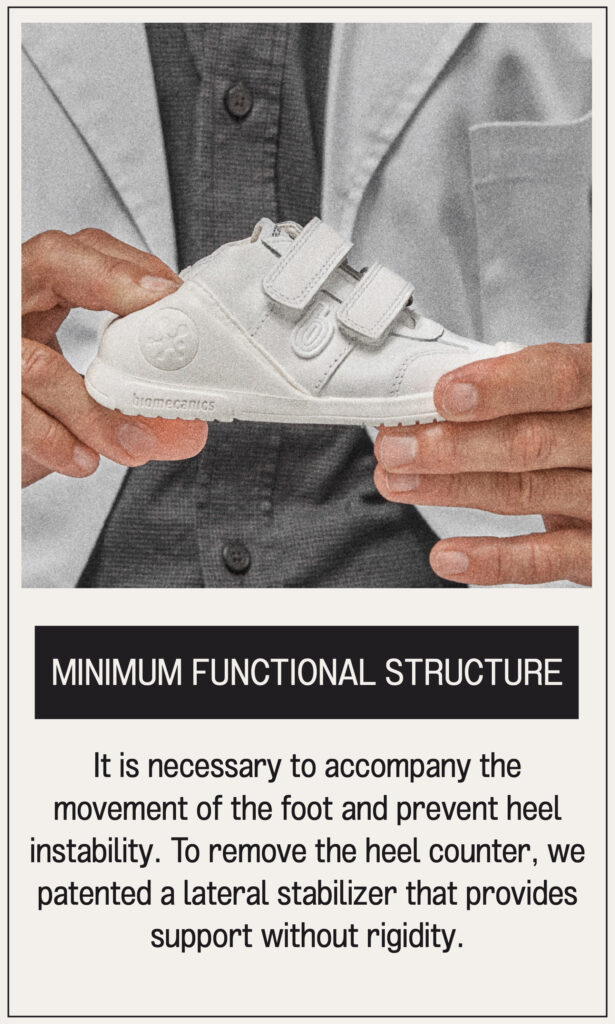
At Biomecanics, we remove the traditional heel counter and replace it with an external lateral stabilizer, maintaining stability without restricting movement. This unique technological innovation was achieved thanks to biomechanical research carried out together with the Institute of Biomechanics (IBV).
Does suitable children’s footwear always have to be barefoot?
Not always. Each foot has specific needs that should be assessed. Shoes that are too soft can cause instability (the “flip-flop effect”) in certain foot types and activities. Feet need freedom, yes—but also a minimum functional structure.